


Critical communication in business: key trends for 2026
« Guided reading
Find the essentials in 60 seconds
The context, key signals and priority actions brought together in this article.
The digital flood is no longer a simple metaphor: it is the daily reality of your teams. In 2026, the information overload reached a point of rupture where e-mail, once king of transmission, became the main obstacle to responsiveness. Imagine your most vital alerts drowned in an ocean of useless notifications...
This guide decrypts how industry leaders are rethinking their digital shield to ensure that essential information arrives at the right time, without ever being ignored.
1. Towards visual preemption
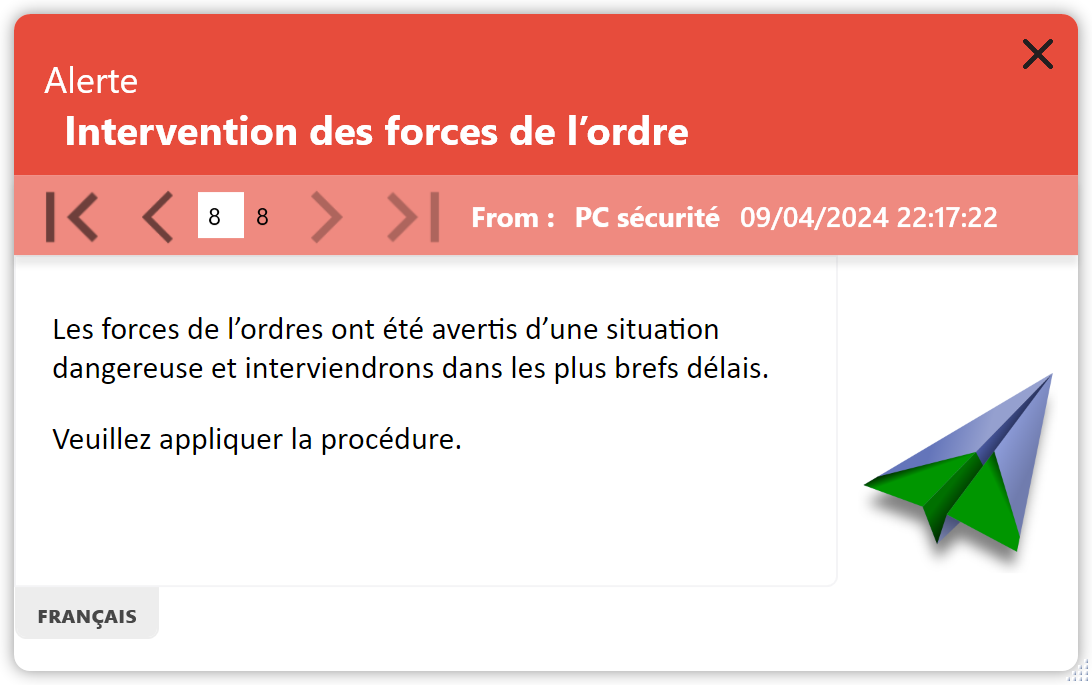
The e-mail is now disqualified to handle the emergency. Whether it's an imminent cyber attack or an evacuation procedure, you can't afford to wait. The dMessage technology uses a native window which is instantly required above all active applications.
Did you know that?
In 2026, an employee receives an average of 120 notifications per day. Visual preemption is the only way to break this digital "noise".
2. Cybersecurity: responding to phishing speed
In 2026, critical communication became the armed arm of the DSI. When a threat is detected, each second counts.
The Red Code reflex
The use of a maximum criticality level creates an effective conditioning: Red = immediate stop.

3. The awakening of the panic button
Security also affects physical integrity. In situations of intense stress (aggression, malaise), no one has time to dial a number.
Simplicity as a lifeline:
4. Sovereignty and On-Premise
The mistrust of the Cloud for sensitive flows is confirmed. Organizations demand that their data never leave their walls.
Confidentiality
No sensitive data is passed through third party servers.
Resilience
Local treatment guaranteeing continuity even without the internet.
& Play Plug
Transparent integration with Microsoft Active Directory.
Unloading for better rule
Critical communication is not just a hazard. It fluidizes the social link (HR, maintenance) without polluting the mailboxes. Through targeting by Active Directory (IP beach, groups), you only solicit the right people at the right time.
Checklist: Your strategy 2026
Frequently Asked Questions
No, the system works on your local network, which guarantees the delivery of messages even in the event of a total internet shutdown.
The key lies in smart targeting via the Active Directory. By sending only relevant information to the right people, you maintain efficiency without generating fatigue.
Ready to transform your internal communication?
Do not leave your critical information at random with an unread e-mail. Join more than 300,000 protected users.